
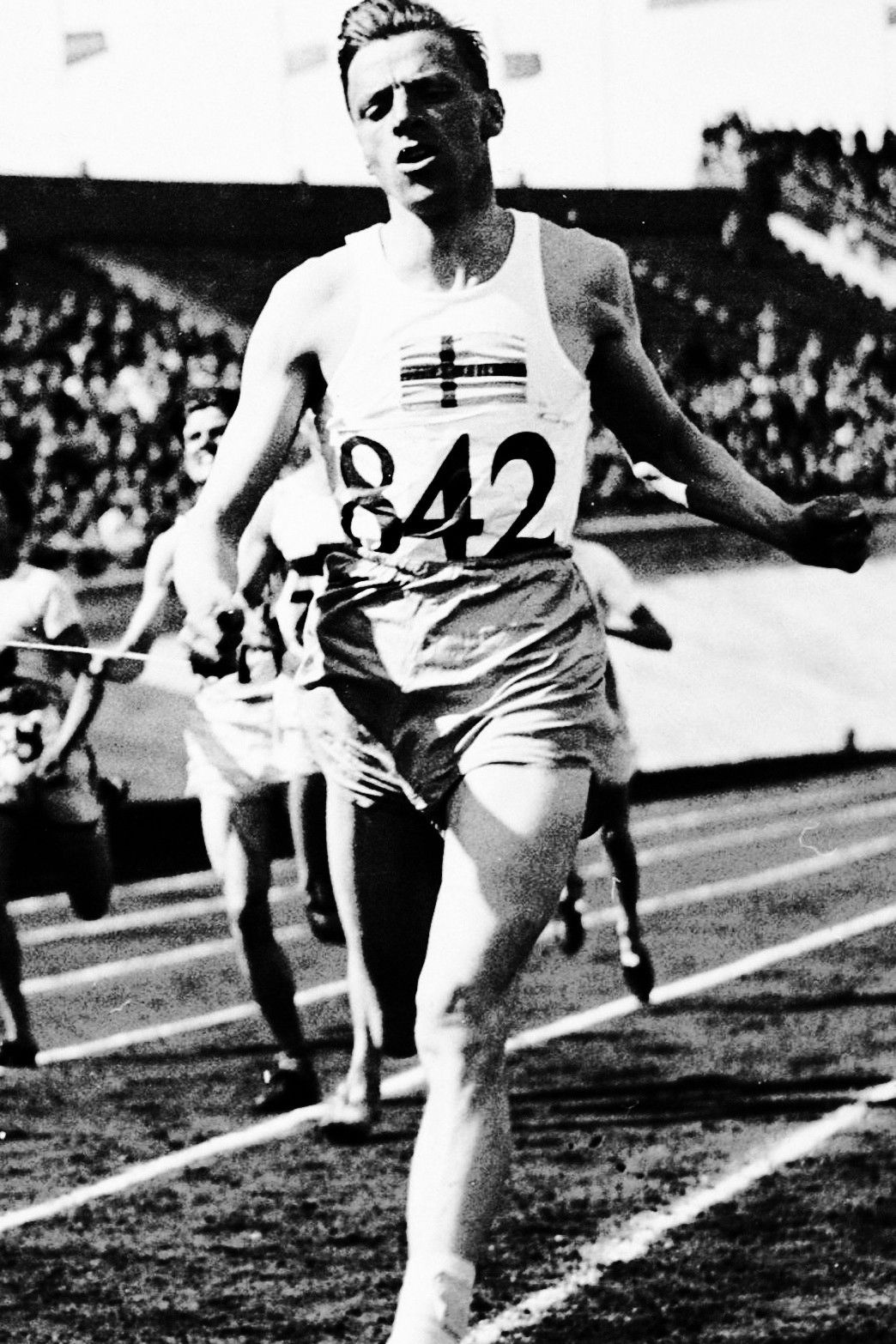
Пааво Нурмі
Paavo Nurmi
Дата народження: 13 червня 1897
Знак зодіаку: Близнята
Дата смерті: 2 жовтня 1973 (76 років)
Місце народження: Турку, Фінляндія
Зріст: 174 см
Всього фільмів (на сайті): 5
Ролі: актор
Знайдено 5 результатів
 7.6
7.6
Сюжет (англ.)
History and the spirit of XXth century Helsinki through the cinema, documentary footage, architecture, art and politics.Helsinki, Forever (2008)
Helsinki, Forever
Сюжет (англ.)
History and the spirit of XXth century Helsinki through the cinema, documentary footage, architecture, art and politics. 5.7
Сюжет (англ.)
This short film chronicles the quest to run a mile in under four minutes starting in the 1920s through the mid-1950s when the world record was first set and when it was first achieved on U.S. soil.Four Minute Fever (1956)
Four Minute Fever
Сюжет (англ.)
This short film chronicles the quest to run a mile in under four minutes starting in the 1920s through the mid-1950s when the world record was first set and when it was first achieved on U.S. soil. 5.8
Сюжет (англ.)
California school boy and Stanford University student Bob Mathias was the first man to win two Olympic Gold Medals in the Decathlon in the 1948 and 1952 Olympics. The film begins with him ...The Bob Mathias Story (1954)
The Bob Mathias Story
Сюжет (англ.)
California school boy and Stanford University student Bob Mathias was the first man to win two Olympic Gold Medals in the Decathlon in the 1948 and 1952 Olympics. The film begins with him ... 6.3
Сюжет (англ.)
Part one of the official film of XV Olympics in Helsinki 1952.Where the World Meets (1952)
Where the World Meets
Сюжет (англ.)
Part one of the official film of XV Olympics in Helsinki 1952. 7.7
Сюжет (англ.)
After being commissioned by the 1936 Olympic Committee to create a feature film of the Berlin Olympics, Riefenstahl shot a documentary that celebrates the human body by combining the poetry of bodies in motion with close-ups of athletes in the heat of competition. Includes the marathon, men's diving, and American track star Jesse Owen's sprint races at the 1936 Olympic games. The production tends to glorify the young male body and, some say, expresses the Nazi attitude toward athletic prowess. Includes the lighting of the torch at the stadium and Adolf Hitler looking on in amazement as Jesse Owens wins an unprecedented four Gold Medals.Olympia Part One: Festival of the Nations (1938)
Olympia Part One: Festival of the Nations
Сюжет (англ.)
After being commissioned by the 1936 Olympic Committee to create a feature film of the Berlin Olympics, Riefenstahl shot a documentary that celebrates the human body by combining the poetry of bodies in motion with close-ups of athletes in the heat of competition. Includes the marathon, men's diving, and American track star Jesse Owen's sprint races at the 1936 Olympic games. The production tends to glorify the young male body and, some say, expresses the Nazi attitude toward athletic prowess. Includes the lighting of the torch at the stadium and Adolf Hitler looking on in amazement as Jesse Owens wins an unprecedented four Gold Medals.Увійдіть, будь ласка, щоб коментувати
Фільтр Скинути фільтри