
Leo de Laforgue
Дата народження: 9 лютого 1902
Знак зодіаку: Водолій
Дата смерті: 30 квітня 1980 (78 років)
Всього фільмів (на сайті): 4
Ролі: сценарист (3), кінематографіст (3), режисер (2), продюсер (2)
Знайдено 4 результати
 6.2
6.2 Сюжет (англ.)
The film shows everyday life in Berlin in the late 1950s and early 1960s. He presents a modern West Berlin after the reconstruction. Recorded between 1957 and 1963.
Gigant Berlin (1964)
Gigant Berlin
Читати опис (англ.)
The film shows everyday life in Berlin in the late 1950s and early 1960s. He presents a modern West Berlin after the reconstruction. Recorded between 1957 and 1963.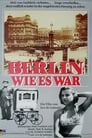
Сюжет (англ.)
This film seeks to pass itself off as a positive and definitive history of the city of Berlin before the outbreak of World War Two. It is heavily influenced by the bent of the National ...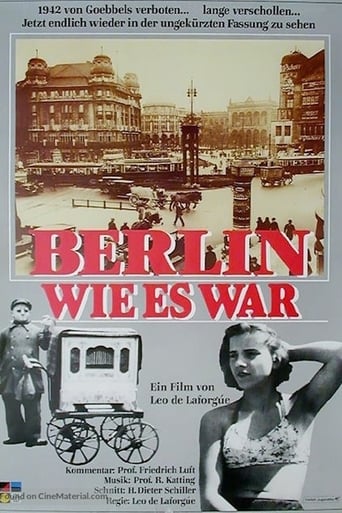
Symphonie einer Weltstadt (1950)
Symphonie einer Weltstadt
Читати опис (англ.)
This film seeks to pass itself off as a positive and definitive history of the city of Berlin before the outbreak of World War Two. It is heavily influenced by the bent of the National ...
Сюжет (англ.)
Two barge skippers fall in love with the same woman.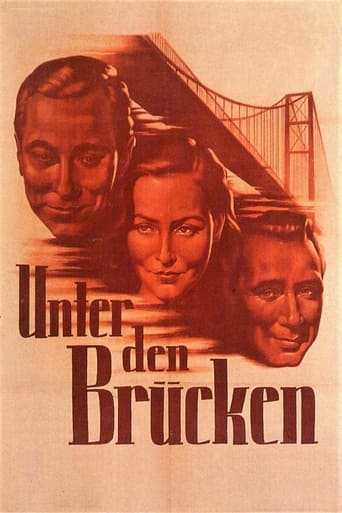
Under the Bridges (1946)
Under the Bridges
12+Читати опис (англ.)
Two barge skippers fall in love with the same woman.
Сюжет (англ.)
After being commissioned by the 1936 Olympic Committee to create a feature film of the Berlin Olympics, Riefenstahl shot a documentary that celebrates the human body by combining the poetry of bodies in motion with close-ups of athletes in the heat of competition. Includes the marathon, men's diving, and American track star Jesse Owen's sprint races at the 1936 Olympic games. The production tends to glorify the young male body and, some say, expresses the Nazi attitude toward athletic prowess. Includes the lighting of the torch at the stadium and Adolf Hitler looking on in amazement as Jesse Owens wins an unprecedented four Gold Medals.
Olympia Part One: Festival of the Nations (1938)
Olympia Part One: Festival of the Nations
Читати опис (англ.)
After being commissioned by the 1936 Olympic Committee to create a feature film of the Berlin Olympics, Riefenstahl shot a documentary that celebrates the human body by combining the poetry of bodies in motion with close-ups of athletes in the heat of competition. Includes the marathon, men's diving, and American track star Jesse Owen's sprint races at the 1936 Olympic games. The production tends to glorify the young male body and, some say, expresses the Nazi attitude toward athletic prowess. Includes the lighting of the torch at the stadium and Adolf Hitler looking on in amazement as Jesse Owens wins an unprecedented four Gold Medals.
Увійдіть, будь ласка, щоб коментувати
Фільтр